



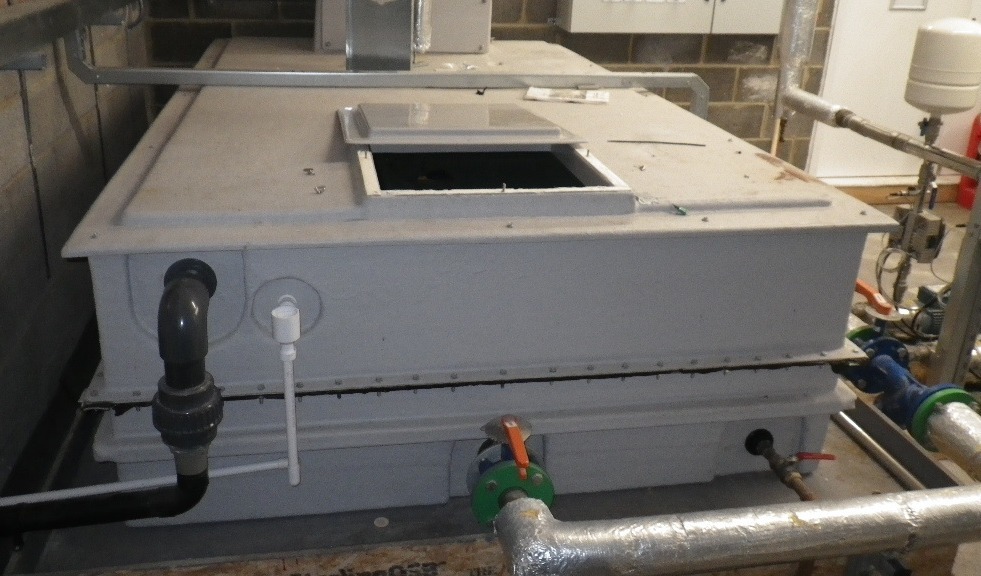
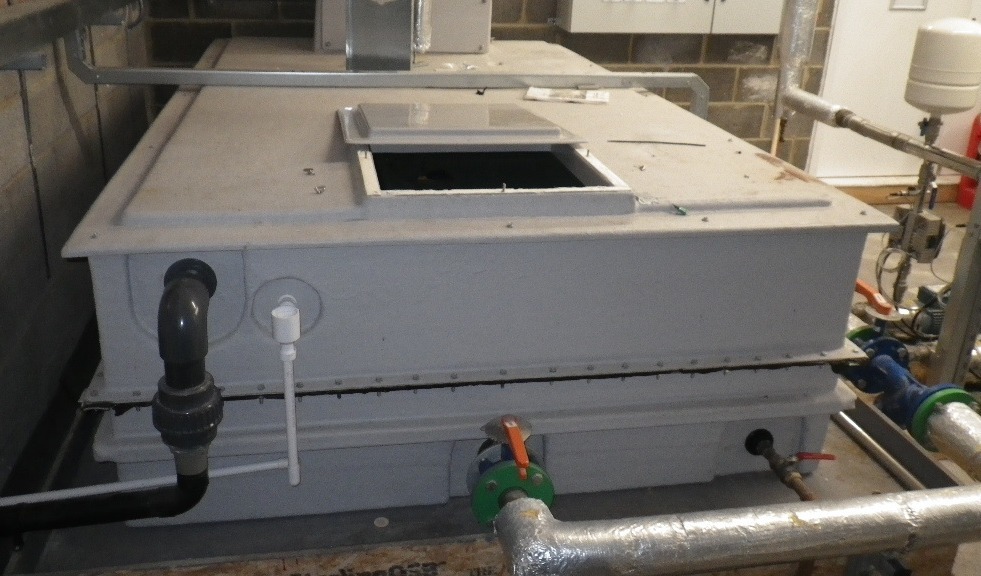
Cold water storage tanks should generally be inspected at least annually, with cleaning, disinfection or remedial works carried out where inspection findings show that further action is required.
Cleaning is not always needed every year as a fixed routine task. Instead, the need for cleaning should be based on the condition of the tank, the findings of the Legionella risk assessment, water quality concerns and whether the tank remains suitable for the system it serves.
For dutyholders, responsible persons, facilities managers and property managers, regular tank inspection is an important part of understanding whether stored cold water is being kept clean, protected from contamination and properly managed.
Cold water storage tanks can develop issues such as sediment, debris, corrosion, poor-fitting lids, damaged insulation, stagnation, poor turnover or unsuitable water temperatures. These conditions can affect water quality and may increase the risk of bacterial growth, including Legionella.
HSE guidance states that cold water systems should be maintained, where possible, below 20oC. It also highlights that larger and more complex systems need appropriate control measures depending on the type and scale of the building.
Quick Answer
- Inspection frequency: Cold water storage tanks should generally be inspected at least annually.
- Cleaning frequency: Cold water storage tanks do not automatically need to be cleaned every year.
- When cleaning may be required: Cleaning and disinfection may be needed where inspection findings, water quality concerns, system changes or the Legionella risk assessment indicate further action is required.
- Temperature control: Cold water should be stored and distributed below 20oC where possible.
- Common tank issues: Sediment, debris, corrosion, poor-fitting lids, missing screens, poor insulation, poor turnover and evidence of contamination.
- Responsibility: The dutyholder or person in control of the premises is responsible for ensuring risks are identified, assessed and managed.
How often should cold water storage tanks be inspected?
Cold water storage tanks should normally be inspected at least annually, with remedial work carried out where necessary.
HSG 274 Part 2 includes annual inspection of cold water storage tanks and remedial work where necessary as part of the checklist for hot and cold water systems. It also refers to checking tank water temperature and incoming mains temperature, with records of maximum stored and supply water temperatures where fixed maximum / minimum thermometers are fitted.
The exact inspection frequency may depend on the findings of the Legionella risk assessment, the condition of the tank, the type of building, the people using the premises and whether previous inspections have identified concerns.
For example, a well-maintained tank in good condition may continue to be managed through routine inspection and monitoring. However, if a tank shows signs of contamination, stagnation, poor turnover, corrosion or deterioration, further action may be required.
In higher-risk settings, or where vulnerable people may be exposed, the inspection regime may need to be reviewed more carefully.
Do you manage a higher-risk setting? Check out our checklist on key water hygiene tasks that should be considered and recorded.
Do cold water storage tanks need to be cleaned every year?
Cold water storage tanks do not automatically need to be cleaned every year.
This is an important distinction. Inspection and cleaning are not the same thing.
A tank should be inspected regularly so its condition can be assessed. Cleaning and disinfection should then be carried out where the inspection findings, water quality results, risk assessment or system condition indicate that it is required.
A tank may need cleaning and disinfection where there is evidence of:
- Contamination
- Sediment or debris
- Biofilm or organic matter
- Corrosion deposits
- Stagnation
- Poor water turnover
- Unsuitable tank condition
- Water quality concerns
- Previous positive microbiological or Legionella results
- Findings from the risk assessment
The important point is that inspection should inform the decision.
Cleaning a tank unnecessarily may not address underlying system issues. Equally, failing to clean a tank when there is evidence of contamination, stagnation or deterioration can leave risks unmanaged.
Inspection frequency vs cleaning frequency
Cold water storage tanks should be inspected regularly, usually at least annually, but this does not mean that every tank must be cleaned every year.
Inspection is used to understand the condition of the tank.
Cleaning and disinfection should be carried out when the tank condition, inspection findings, water quality results or risk assessment indicate that it is required.
This distinction helps dutyholders avoid both unnecessary routine cleaning and the opposite problem: leaving a tank unmanaged when evidence shows action is needed.
Why are cold water storage tank inspections important for Legionella control?
Cold water storage tanks can sometimes be overlooked because they are often located in roof spaces, plant rooms or areas that are not accessed frequently.
However, if a tank supplies outlets within a building, its conditions can affect the quality of the water distributed through the system.
A tank inspection can help identify whether:
- The lid is secure, close-fitting and in good condition
- The tank is clean and free from significant sediment or debris
- Insect screens are present and suitable
- The tank is protected from contamination
- Insulation is present and effective
- The stored water temperature is being controlled
- The tank is appropriately sized for water demand
- Water turnover is adequate
- There are signs of corrosion or deterioration
- Pipework arrangements may be contributing to stagnation
- Remedial works, cleaning, disinfection or replacement may be required
These findings help dutyholders make informed decisions about how the system should be managed.
What temperature should water in a cold water storage tank be?
Cold water should be stored and distributed below 20°C where possible.
Temperature is one of the key control measures for managing Legionella risk in hot and cold water systems. HSE guidance states that cold water systems should be maintained, where possible, at a temperature below 20°C.
Where cold water storage tanks are exposed to heat sources, poorly insulated, oversized, slow to turn over or located in warm roof spaces or plant rooms, cold water temperatures may rise.
This can increase the importance of checking:
- Tank water temperatures
- Incoming mains temperatures
- Outlet temperatures
- Insulation condition
- Tank location
- Pipework routes
- Water turnover
- Any nearby heat sources
If cold water temperatures are regularly above 20°C, this should be investigated and addressed where reasonably practicable.
What problems can be found during a cold water storage tank inspection?
Common issues found during cold water storage tank inspections may include:
- Missing, damaged or poorly fitting lids
- Missing or damaged insect screens
- Sediment at the base of the tank
- Corrosion or staining
- Debris or signs of contamination
- Poor insulation
- Water temperatures above recommended levels
- Oversized tanks with poor turnover
- Redundant or underused tanks
- Ball valves or internal components in poor condition
- Inlet and outlet arrangements that may reduce circulation
- Access issues that make inspection or cleaning difficult
Not every issue means the tank must automatically be replaced. Some problems can be corrected through cleaning, disinfection, repair or minor remedial works.
However, where the tank is unsuitable ,deteriorating, poorly configured or no longer required, replacement or removal may need to be considered.
When should a cold water storage tank be cleaned and disinfected?
A cold water storage tank may need to be cleaned and disinfected where inspection identifies significant contamination, sediment, biofilm, stagnation or other concerns.
Cleaning and disinfection may also be required:
- Following certain remedial works
- After changes to the system
- Where a tank has been out of use
- Where microbiological results indicate a concern
- Where the Legionella risk assessment recommends it
- As part of recommissioning after prolonged shutdown
- Where water quality has visibly deteriorated
The decision should be based on evidence and risk, rather than a fixed assumption that every tank must be cleaned annually.
If your risk assessment or inspection identifies poor tank condition, cold water storage tank cleaning and disinfection may be recommended to help control water hygiene risks.
What happens if a cold water storage tank is no longer needed?
In some buildings, cold water storage tanks may remain in place even through demand has changed or the system has altered over time.
Where tanks are redundant, oversized or no longer necessary, they can contribute to stagnation and poor water turnover.
In these cases, the responsible person may need to consider whether the tank should be:
- Removed
- Replaced with a more suitable tank
- Reconfigured
- Bypassed safely where appropriate
- Managed through additional control measures
Removing unnecessary stored water can sometimes help reduce stagnation and simplify ongoing water hygiene management.
Any changes should be properly assessed, planned and documented.
Who is responsible for cold water storage tank inspection and cleaning?
The dutyholder or person in control of the premises is responsible for ensuring that water hygiene risks are identified, assessed and managed.
In practice, this may involve a responsible person, facilities manager, property manager, estates team or external water hygiene provider.
HSE guidance states that employers or people in control of premises must appoint someone competent to help meet their health and safety duties and take responsibility for controlling any identified risk from exposure to Legionella bacteria.
Where an external provider is used, they should be competent to inspect the tank, identify issues, recommend suitable actions and carry out cleaning, disinfection or remedial works where required.
Choosing the right provider is also important, as the quality of the Legionella risk assessment will influence how clearly risks, responsibilities and required actions are identified.
What records should be kept for cold water storage tanks?
Records are an important part of demonstrating that cold water storage tanks are being properly managed.
These may include:
- Tank inspection reports
- Photographic evidence
- Temperature records
- Cleaning and disinfection certificates
- Microbiological or Legionella sampling results
- Remedial action reports
- Risk assessment findings
- Written scheme updates
- Evidence of completed corrective actions
Records should be clear, accessible and regularly reviewed.
They should also show how any issues identified during inspection have been followed up.
Ongoing water hygiene monitoring can help ensure key checks are completed, recorded and reviewed consistently as part of your water hygiene control programme.
How can BrodexTrident help?
BrodexTrident supports organisations with cold water storage tank inspection, cleaning, disinfection and remedial works as part of wider water hygiene management.
Our services can help dutyholders and responsible persons understand the condition of their cold water storage tanks, identify issues that may affect water hygiene, and determine whether cleaning, disinfection, repair, replacement or removal may be required.
We can also support with Legionella risk assessments, water hygiene monitoring, sampling, remedial actions and ongoing compliance support.

FAQs about cold water storage tank inspection and cleaning
How often should cold water storage tanks be inspected?
Cold water storage tanks should generally be inspected at least annually, with remedial action taken where required. The frequency may need to be reviewed if the tank condition, building use or Legionella risk assessment findings indicate increased risk.
Do cold water storage tanks need to be cleaned every year?
Cold water storage tanks do not automatically need to be cleaned every year. Cleaning and disinfection should be based on the condition of the tank, inspection findings, water quality concerns and the Legionella risk assessment.
What are signs a cold water storage tank may need cleaning?
A cold water storage tank may need cleaning if there is visible sediment, debris, biofilm, contamination, corrosion deposits, stagnant water or water quality concerns. The findings should be reviewed alongside the Legionella risk assessment and any relevant monitoring or sampling results.
What temperature should cold water be stored at?
Cold water systems should be maintained below 20oC where possible. If cold water temperatures are regularly above 20oC, the cause should be investigated and suitable control measures considered.
Who is responsible for cold water storage tank inspection?
The dutyholder or person in control of the premises is responsible for ensuring water hygiene risks are identified, assessed and managed. This may be supported by a responsible person, facilities manager, estates team or competent water hygiene provider.