



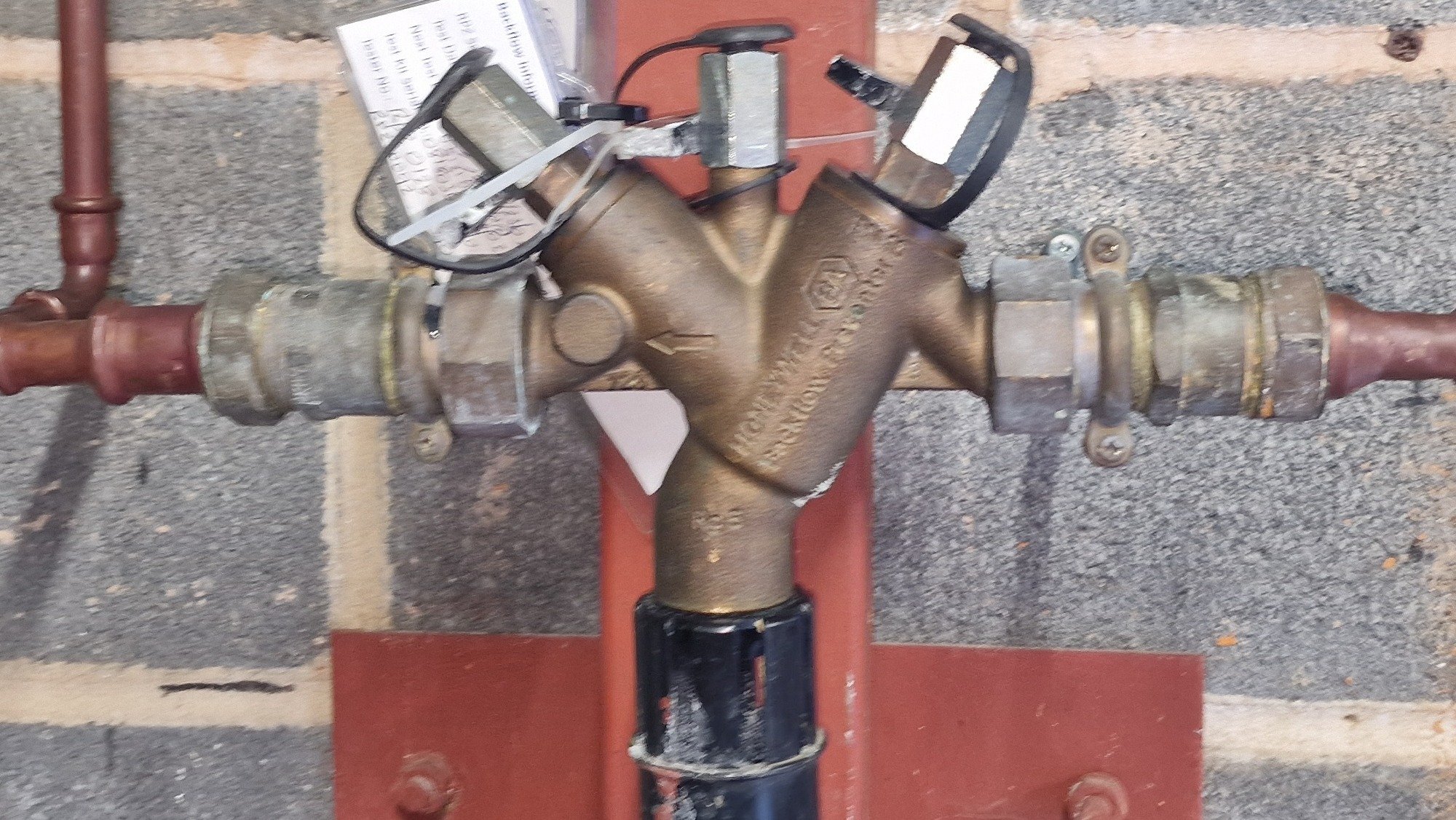
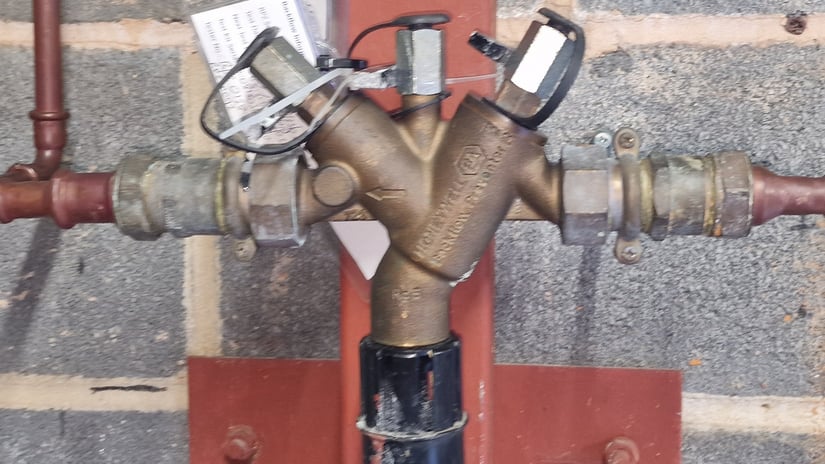
Protecting the public water supply is a legal and practical priority for businesses, landlords, facilities managers and building owners. One area that can sometimes be overlooked is backflow prevention — specifically, whether an RPZ valve is installed, tested and maintained correctly.
If your premises has an RPZ valve, or you have been told one may be required, it is important to understand how often RPZ valve testing is required, who is responsible for arranging it, and what can happen if testing is missed.
What is an RPZ valve?
An RPZ valve – short for Reduced Pressure Zone valve – is a mechanical backflow prevention device, also known as a Type BA device. It is designed to protect the public water supply by preventing water from flowing backwards into the mains where there is risk of contamination. It can provide protection against both back pressure and back siphonage up to and including Fluid Category 4 risk.
In simple terms, an RPZ valve helps stop potentially contaminated water from a commercial or industrial system from re-entering the wholesome water supply.
When is an RPZ valve required?
Whether an RPZ valve is required depends on the level of backflow risk present on the system. Under the Water Supply (Water Fittings) Regulations 1999, fluid risks are classified into categories, and Fluid Category 4 is defined as fluid representing a significant health hazard because of the concentration of toxic substances or other harmful materials. RPZ valves are a recognised form of protection for risks up to and including Fluid Category 4.
Common examples may include systems, equipment or processes where there is a higher contamination risk and standard backflow protection is not sufficient. The exact requirement should always be based on the specific installation and the water supplier’s expectations. As WRAS notes, the installation and use of an RPZ valve must be notified in advance to the local water supplier, and consent may include additional conditions.
How often should an RPZ valve be tested?
In most cases, RPZ valves must be tested at least annually. WRAS states that site testing must be carried out at least every year, or more frequently if required by the water supplier. For portable equipment or units that are routinely moved between premises, testing may be required every six months or whenever the device is transferred, whichever comes first.
That annual test interval is not just good practice. It is a key part of ensuring the valve remains in proper working order and continues to provide effective backflow protection. WRAS also makes clear that the installation and use of an RPZ valve requires a long-term commitment to regular testing and maintenance.
Who can carry out RPZ valve testing?
RPZ valves cannot be tested by just anyone. WRAS states that commissioning and testing must only be carried out by an accredited tester approved by the water supplier as competent to test. A list of suitably qualified testers is maintained through the industry approval process.
This matters because RPZ testing is a formal process. It is not a basic visual check or a general plumbing inspection. The device must be inspected and function-tested correctly, and the results recorded appropriately.
Who is responsible for RPZ valve testing?
In practice, responsibility usually sits with the owner, occupier or person responsible for the water system on the premises. WRAS states that those responsible for the water supply in their premises must be familiar with the risks from backflow and must carefully monitor their systems. It also states that the water supplier’s customer must ensure the downstream water quality is suitable and that the backflow risk does not exceed Fluid Category 4.
So while the water supplier may set conditions and require evidence of compliance, the day-to-day responsibility for making sure the RPZ valve is tested, maintained and properly documented generally rests with the premises side rather than the water company. That is why it's important for duty holders to know where RPZ valves are installed and when testing is due.
What records should be kept after RPZ valve testing?
After testing, a test report certificate should be completed. WRAS says copies should be submitted to both the person responsible for the device and the water supplier within 10 working days. A current test certificate should also be available on site, and installation, commissioning and subsequent test data should be retained by the customer for at least 5 years.
Keeping clear records is important for more than administration. It helps demonstrate that the valve has been tested on time, that any failures have been dealt with, and that the premises are managing backflow risks appropriately.
What happens if RPZ testing is missed?
If testing is missed, there is a risk that the valve may no longer be providing reliable backflow protection. That can create a compliance issue and, more importantly, a potential contamination risk to the water supply.
WRAS states that all fittings must be maintained in full working order, and failure to comply with the installation, maintenance and testing requirements may lead the water supplier to temporarily suspend supply, require the removal of the RPZ valve, or insist on an alternative suitable backflow prevention arrangement. The guidance also notes that installing or using an RPZ valve without the required consent could result in criminal prosecution.
Practical questions to ask if you have an RPZ valve on site
If you manage or are responsible for a building, it is worth checking:
- Do we know where all RPZ valves are installed?
- Do we have the latest test certificates?
- Is the next test date already scheduled?
- Was the last test completed by an accredited, approved RPZ tester?
- Have records been retained properly?
- Are we still using the valve in the same way and for the same risk level it was originally installed for?
These simple checks can help avoid missed testing dates and compliance problems later.
Final thoughts
RPZ valves play an important role in protecting water supplies from contamination, but they are not a fit-and-forget device. In most cases, they must be tested annually, sometimes more frequently, and testing must be completed by a properly accredited RPZ tester. Responsibility for arranging that testing and keeping records usually sits with the person responsible for the premises or water system.
If you are unsure whether an RPZ valve is installed on your site, whether testing is overdue, or whether your system has the right level of backflow protection in place, BrodexTrident can help you review your water system compliance requirements and plan the next steps.