



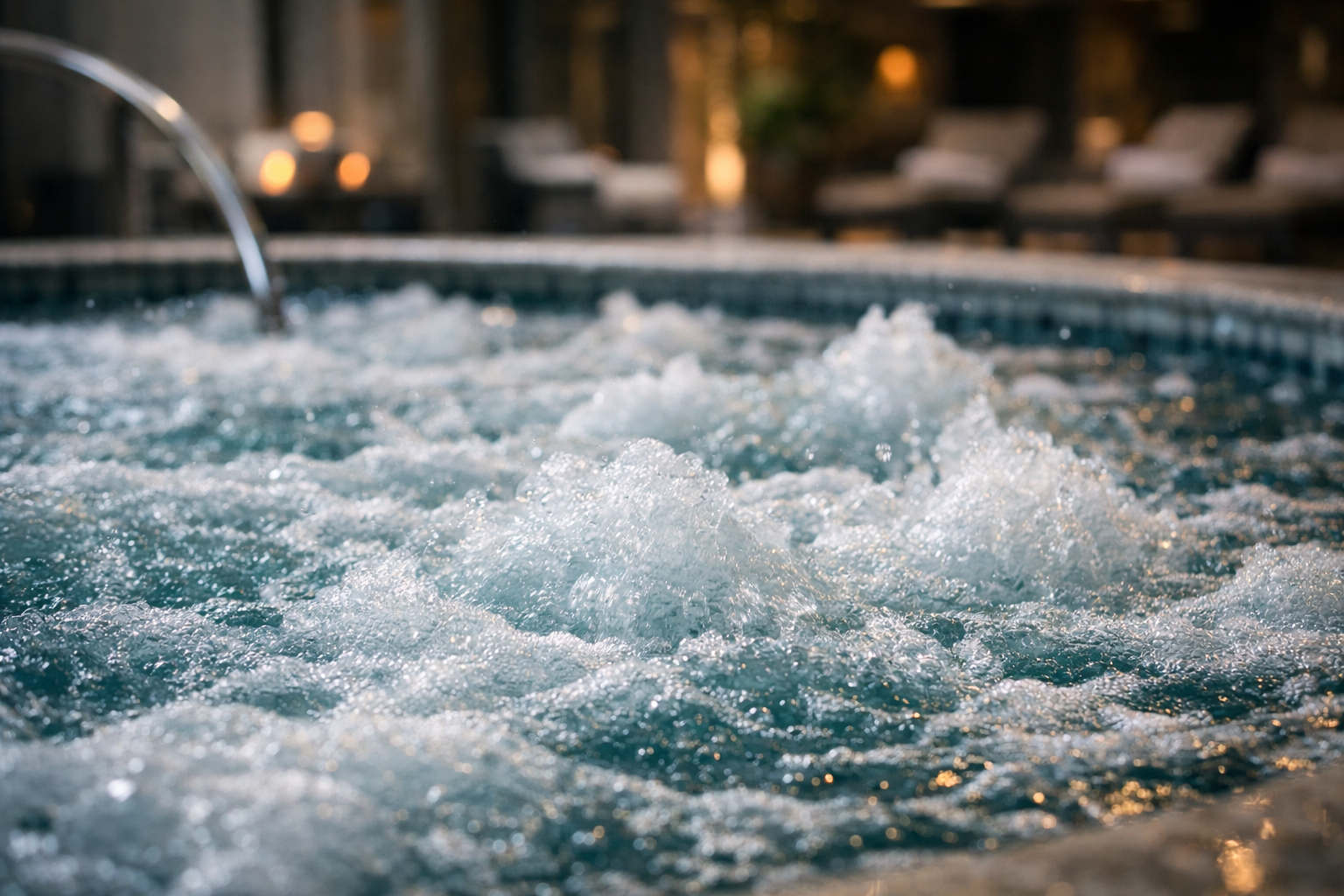
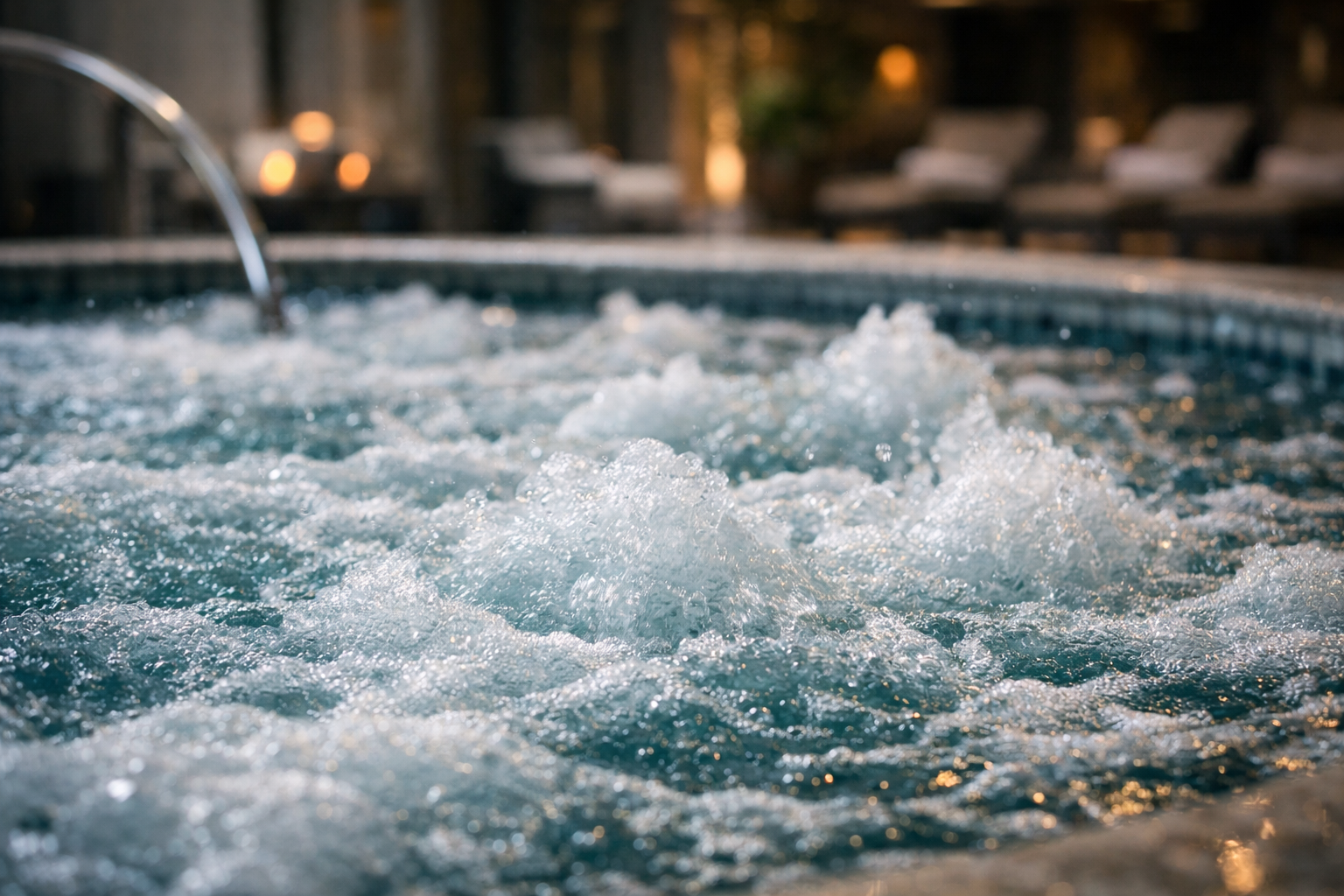
Hot tubs and spa pools are attractive features in hotels, lodges, holiday parks and serviced accommodation. They enhance guest experience and drive bookings.
They are also recognised sources of Legionnaires’ disease outbreaks when not properly managed.
Warm, aerated water, high bather loads and complex pipework create conditions that can allow bacteria to multiply rapidly. UK guidance treats spa pools as higher-risk systems for this reason.
For hospitality operators, this means hot tubs require structured oversight – not informal maintenance.
Why Hot Tubs Present a Higher Risk
Spa pools typically operate between 30-40 °C, well within the temperature range where Legionella bacteria can grow.
Unlike swimming pools, they:
- Contain a much smaller water volume
- Service multiple bathers in quick succession
- Generate aerosols through jets and air blowers
- Accumulate organic contamination rapidly
Cosmetics, perspiration, skin cells and other contaminants increase the nutrient load in the water. When disinfectant levels fluctuate, which they can do quickly in busy settings, microbiological growth can occur within hours.
In addition to Legionella, guidance highlights risks from:
- Pseudomonas aeruginosa (often linked to hot tub rashes)
- Coliforms and E.Coli (indicating contamination)
This combination of warmth, agitation and organic loading is what makes spa pools uniquely sensitive from a compliance perspective.
Legal Duties for Hospitality Operators
Under UK health and safety legislation, duty holders must:
- Carry out a suitable and sufficient risk assessment
- Appoint a competent, responsible person
- Implement a written scheme of control
- Monitor and review control measures
- Maintain appropriate records
This applies to:
- Hotels
- Holiday parks
- Shared spa facilities
- Serviced accommodation
- Domestic-type hot tubs used as part of a business activity
Where five or more employees are present, significant findings must be recorded. Monitoring and inspection records are generally expected to be retained for at least five years.
Hot tubs cannot be managed casually. They must be managed deliberately.
We provide Legionella risk assessments and compliance reviews for hotels, holiday parks and serviced accommodation across the UK, ensuring your documentation aligns with both legal requirements and day-to-day operation.
Contact our team to discuss your hospitality water hygiene requirements.
Domestic-Type vs. Commercial-Type Spa Pools
One area that often confuses is the difference between domestic-type and commercial-type systems.
Domestic-Type Hot Tubs Used Commercially
Common in:
- Holiday lets
- Lodges
- Hotel rooms with private tubs
These are designed for small, discrete groups. Water should be replaced:
- Weekly, or between each group of users – whichever is sooner.
- Hotel leisure facilities
- Shared spa areas
- Holiday park communal facilities
They are not suitable for high bather turnover or shared access across multiple accommodation units.
Commercial-Type Spa Pools
Common in:
These typically include:
- Deck-level overflow
- Continuous chemical dosing
- Designed higher bather load capacity
- A balance tank as part of the recirculation system
The balance tank collects displaced and recirculated water and is an active part of the system. Because it stores warm water and organic material, it can become a source of contamination if not properly maintained.
UK guidance expects balance tanks to be:
- Accessible for inspection and cleaning
- Designed to allow complete drainage
- Inspected regularly and drained and cleaned at least twice per year, subject to risk assessment
Turnover time (how quickly the entire water volume passes through filtration and treatment) is typically:
- Around 6 minutes for higher bather loads
- Up to 15 minutes for lower loads
The level of monitoring and control must reflect the type of system in use.
Bather Load and Water Replacement
One of the most common causes of hot tub failure is simple: too many users, not enough water replacement.
Guidance sets a clear expectation for design bather load:
- Approximately 10 times the spa volume (in cubic metres) per hour, with a minimum of 250 litres of water per bather
- Disinfectant residuals
- Filtration performance
- Microbiological stability
For example, a 5m3 spa pool may be designed for up to 50 bathers per hour – but only if treatment systems are functioning correctly.
Exceeding this places immediate strain on:
Water replacement is equally critical.
In commercial settings, full water replacement should occur when:
- The cumulative bather load equals 100 x the spa’s water capacity (in m3) since the last refill
- Weekly drain, clean and refill – or between guest groups
- pH: 7.0-7.6
- Free chlorine: 3-5 mg/l
- Bromine: 4-6 mg/l
For domestic-type systems used commercially:
When replacement intervals are extended, total dissolved solids rise, disinfectant effectiveness reduces, and bacterial growth becomes more likely.
Monitoring and Testing Requirements
Routine monitoring is not optional. It is the mechanism that proves control measures are working.
Chemical Parameters
Key operational ranges include:
If disinfectant levels fall significantly outside recommended ranges, the spa pool may require temporary closure until corrected.
High combined chlorine, elevated total dissolved solids, or persistent imbalance are warning signs that water replacement or system review is required.
Balance Tank Monitoring
Where fitted, balance tanks should be included in inspection routines. Guidance recommends:
- Weekly visual checks
- At least twice-yearly drain-down and cleaning (more frequently if risk dictates)
Visible debris, biofilm or sediment within a balance tank is a warning sign that control measures require review.
Microbiological Testing
Minimum sample frequency:
- Monthly: TACC, coliforms, E.coli, Pseudomonas
- Quarterly: Legionella
Immediate closure is expected where there is:
- 1000 cfu/L Legionella
- 50 cfu/100ml Pseudomonas aeruginosa
- Significant E.Coli contamination
These thresholds exist to protect users. When exceeded, corrective action must be swift and documented.
Written Scheme of Control
A compliant spa pool regime should include:
- System description and schematic
- Defined responsibilities
- Monitoring frequency
- Cleaning and disinfection regimes
- Emergency procedures
- Clear corrective actions
Records should capture:
- Test results
- Cleaning logs
- Maintenance checks
- Water replacement events
- Training records
In the event of inspection, documentation demonstrates due diligence.
Protecting Guests and Business Continuity
Guidance recognises that outbreaks have occurred in hotels, holiday homes and leisure settings. When controls are not robust, the consequences can include enforcement action, reputational damage and temporary closure of facilities.
Effective spa pool management is therefore not simply about passing inspection. It is about protecting guests, safeguarding staff and maintaining business continuity.
If your hospitality setting operates a hot tub or spa pool, ensure that:
- Your risk assessment reflects actual usage patterns
- Monitoring frequencies are appropriate to bather load
- Water replacement intervals are clearly defined
- Corrective actions are documented and understood
Where uncertainty exists, it is better to review the control regime proactively than to respond reactively after a failed result.
Hot tub systems require structured oversight and documented control. If you are unsure whether your monitoring regime, sampling frequency or written scheme aligns with current UK guidance, a proactive review can prevent costly disruption.
Contact our team to discuss your hospitality water hygiene requirements.